Nalwa Aero: How Box-Wing Technology is Shaping the Future of eVTOL Aircraft
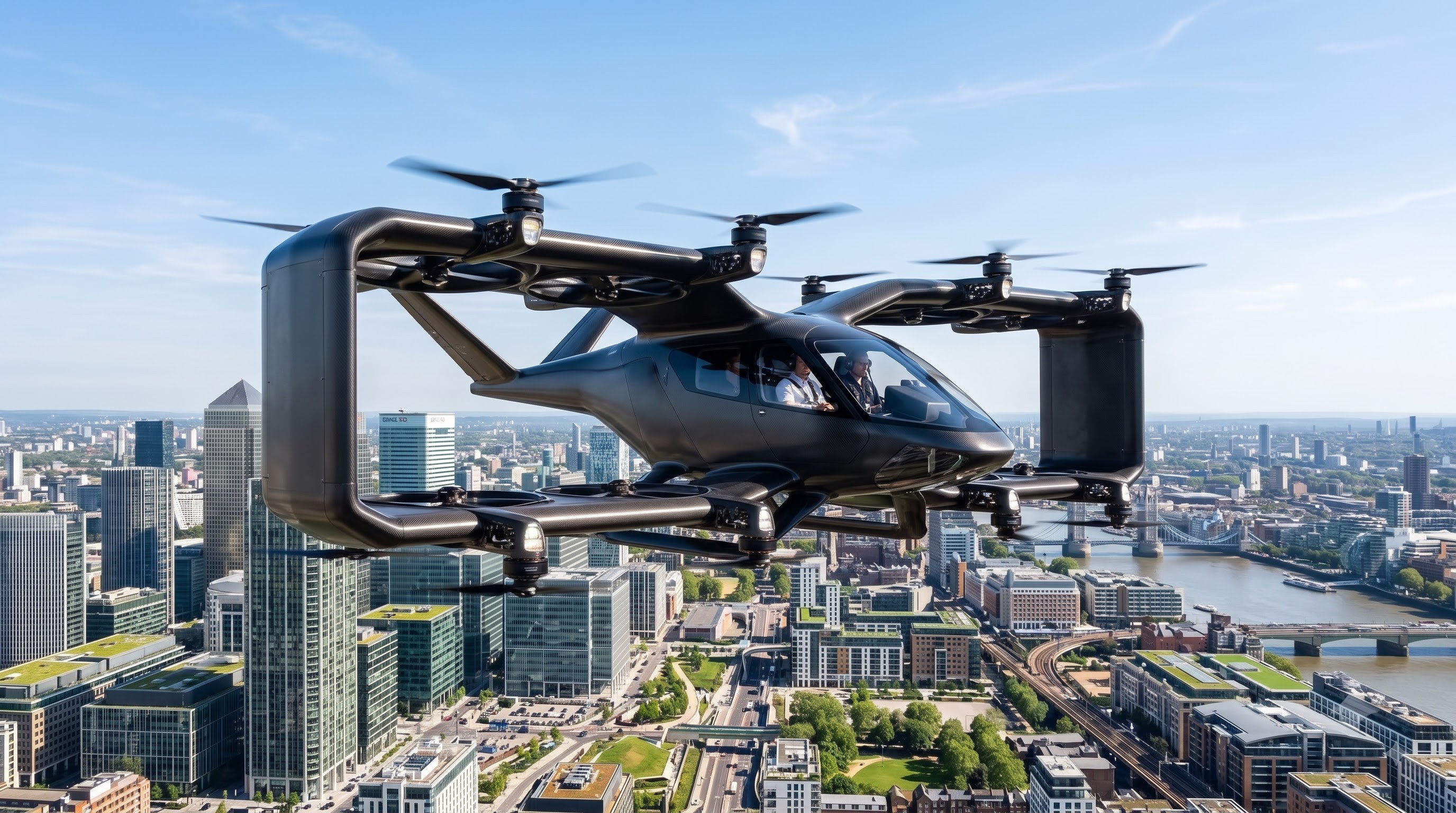
The aviation industry is entering a new era where innovation is no longer measured only by speed or engine power. Today, aircraft are expected to be lighter, cleaner, more efficient, and capable of operating with significantly lower energy consumption. As electric aviation continues to evolve, manufacturers are exploring new aircraft architectures that improve aerodynamic efficiency without compromising structural strength. Nalwa Aero is among the companies embracing this shift by developing an eVTOL aircraft based on an advanced box-wing configuration.
Instead of relying on a conventional aircraft layout, Nalwa Aero has adopted a design philosophy focused on improving aerodynamic performance, reducing structural weight, and maximizing battery efficiency. Every engineering decision made during the development of its aircraft has been driven by detailed computational analysis, aerodynamic simulations, and structural optimization. One of the most important of these decisions was selecting a box-wing configuration over the traditional cantilever wing.
Why Wing Design Matters
Every aircraft relies on its wings to generate lift, the force that allows it to overcome gravity and remain airborne. Lift is created because air travels faster over the upper surface of the wing than beneath it, producing a pressure difference that pulls the aircraft upward.
While this principle enables flight, it also creates one of aviation's largest aerodynamic challenges.
At the tip of a conventional wing, the high-pressure air beneath the wing naturally flows toward the low-pressure region above it. This movement causes the air to curl around the wingtip, creating rotating spirals known as wingtip vortices.
Although invisible, these vortices consume a significant amount of energy. Instead of contributing to forward motion, the aircraft expends energy creating turbulent airflow behind the wings. This phenomenon is known as induced drag.
For electric aircraft, induced drag becomes even more significant because every unit of energy comes from onboard batteries. Reducing aerodynamic losses directly improves flight range, endurance, payload capability, and overall efficiency.
How Nalwa Aero Uses Box-Wing Technology
To minimize these aerodynamic losses, Nalwa Aero selected a box-wing configuration during the conceptual design phase of its aircraft.
Unlike a conventional wing with an open tip, a box-wing connects the front and rear wings using vertical fins, creating a closed aerodynamic loop. This arrangement significantly restricts the movement of high-pressure air around the wingtip, reducing the strength of wingtip vortices before they fully develop.
By suppressing vortex formation, the aircraft experiences considerably lower induced drag. More of the available energy is converted into useful lift rather than being lost to turbulence.
For an electric aircraft, this improvement is extremely valuable. Lower drag means the propulsion system requires less power to maintain cruise flight, helping extend battery life while improving operational efficiency.
This aerodynamic advantage is one of the primary reasons Nalwa Aero chose the box-wing architecture instead of following a conventional aircraft design.
Structural Advantages of the Box-Wing
The benefits of the box-wing extend beyond aerodynamics.
A conventional aircraft wing behaves like a cantilever beam. Since it is supported only where it joins the fuselage, aerodynamic forces generate very large bending loads at the wing root. Engineers compensate for these loads by using larger spars and heavier reinforcement, increasing the structural weight of the aircraft.
The box-wing configuration used by Nalwa Aero distributes these loads differently.
Because the front and rear wings are connected, structural forces are shared throughout the entire framework instead of concentrating at a single attachment point. This closed-loop structure significantly reduces bending moments while increasing torsional stiffness.
The result is a stronger and more rigid airframe capable of supporting distributed electric propulsion systems without excessive structural weight.
For an eVTOL aircraft, this added rigidity also improves flight stability while providing secure mounting points for propulsion units and other critical systems.
Advanced Engineering at Nalwa Aero
Selecting a box-wing configuration also introduces considerable engineering complexity.
Unlike a conventional aircraft, the airflow over the front wing directly affects the rear wing. These aerodynamic interactions create highly complex pressure distributions that cannot be accurately predicted using traditional analytical methods alone.
To overcome this challenge, Nalwa Aero relies extensively on Computational Fluid Dynamics (CFD), structural simulations, and finite element analysis throughout the aircraft development process.
These advanced digital engineering tools enable the design team to study airflow behaviour, identify regions of aerodynamic loss, optimise lift distribution, and evaluate structural performance long before manufacturing begins.
Virtual simulations also allow engineers to validate multiple design iterations, reducing development time while improving confidence in the final aircraft configuration.
Manufacturing a box-wing aircraft presents additional challenges because the joints connecting the wings must withstand aerodynamic loads, structural forces, and torsional stresses simultaneously. Maintaining precise alignment across these interconnected components requires advanced manufacturing techniques and stringent quality control processes.
Why Nalwa Aero Selected the Box-Wing Configuration
During the early stages of aircraft development, Nalwa Aero evaluated multiple wing configurations through detailed trade-off studies.
The engineering team established several key objectives.
The aircraft needed to maximise aerodynamic efficiency during forward flight while remaining structurally lightweight. It also had to provide a rigid platform for electric propulsion systems, maintain stability across different phases of flight, and make the most efficient use of limited battery energy.
After comparing multiple design approaches, the box-wing configuration proved to be the most effective solution.
Its ability to reduce induced drag, improve structural efficiency, and distribute loads throughout the airframe aligned perfectly with the company's engineering objectives.
Rather than viewing aerodynamics and structural design as separate disciplines, Nalwa Aero integrated both into a single optimized aircraft architecture.
The Future of Electric Aviation
Electric aviation is changing the way aircraft are designed. Future aircraft must achieve greater efficiency not by increasing engine power, but by reducing aerodynamic losses and improving structural performance.
This philosophy lies at the core of Nalwa Aero's engineering approach.
Every aspect of the aircraft from its aerodynamic surfaces to its structural framework is designed to maximise efficiency while supporting safe and reliable flight.
The adoption of box-wing technology demonstrates how advanced engineering can solve challenges associated with battery-powered aircraft and create new possibilities for Advanced Air Mobility.
As Nalwa Aero continues developing its eVTOL platform, its emphasis on aerodynamic innovation, structural optimisation, and advanced computational engineering positions the company at the forefront of next-generation aircraft design.
By combining modern aerodynamics with intelligent structural engineering, Nalwa Aero is not simply developing another aircraft. It is helping shape the future of efficient, sustainable, and high-performance electric aviation.